



The creator economy just hit a bottleneck.
Influencer rates have skyrocketed. Production schedules stretch for months. And the moment a campaign finally launches, your spokesperson is already promoting three other brands.
Meanwhile, a quieter revolution is unfolding: AI avatars are stepping into the spotlight, delivering brand messages with consistency, scalability, and a fraction of the cost. What started as experimental tech has become a legitimate content strategy, and the data backs it up.
The New Face of Brand Communication
According to Wyzowl’s 2025 industry survey, 93% of marketers report strong ROI from video, the highest confidence level ever recorded. But here’s the challenge: producing that video content at the speed and volume today’s platforms demand is nearly impossible with traditional methods.
Enter the talking avatar AI.
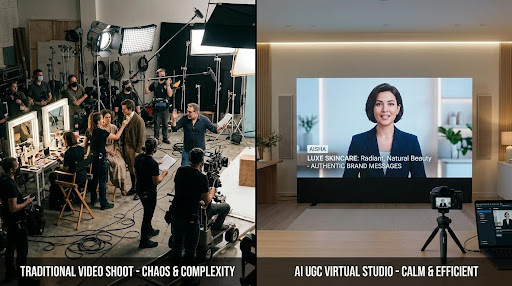
Unlike human creators who require:
- Scheduling coordination across time zones
- Hair, makeup, and wardrobe prep
- Multiple takes and reshoots
- Exclusivity contracts and usage rights
An AI avatar, like one made using Topview AI, operates on demand. Upload a script, select a voice and visual style, and generate a polished video in minutes. No green rooms. No contract negotiations. No creative differences.
The technology has evolved far beyond the robotic talking heads of early experiments. Built on advanced motion models like Seedance 2.0, modern AI avatars deliver natural gestures, authentic facial expressions, and speech patterns that feel genuinely human. They lean in for emphasis, smile at the right moments, and maintain eye contact—all the subtle cues that build trust with viewers.
The Consistency Problem Traditional Spokespeople Can’t Solve
Here’s what brands rarely admit publicly: human spokespeople create logistical nightmares.
Your influencer gets sick the week of launch. Your spokesperson signs with a competitor. The actor who perfectly embodied your brand in Q1 is unavailable for Q3.
AI avatars eliminate these variables entirely. The same talking avatar appears across every touchpoint such as website explainers, social ads, product demos, delivering a unified brand voice that builds recognition over time. Recognition isn’t just about awareness; data from 2025 showed that ads featuring consistent characters or visual patterns drove x2 higher recall and significantly better conversion than faceless, one-off variations.
For global brands, this consistency extends across languages and regions. The same avatar AI can deliver localized messages in Spanish, Mandarin, or Arabic with culturally appropriate expressions and gestures without requiring any casting calls.

From Zero to Video in Under an Hour ⚡
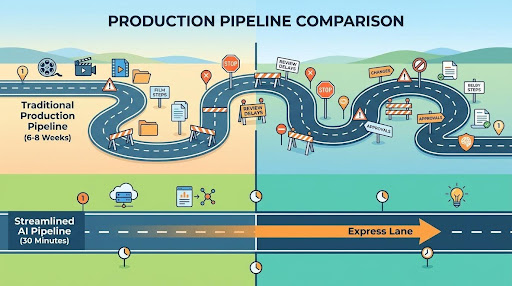
The production workflow tells the real story:
Traditional method:
- Brief agency/creator (1-2 weeks)
- Script approval rounds (3-5 days)
- Schedule shoot (1-3 weeks)
- Production day (8+ hours)
- Post-production (1-2 weeks)
- Revisions (3-7 days)
Total: 6-8 weeks minimum
AI avatar video method:
- Upload image + script (5 minutes)
- Select voice and style (2 minutes)
- Generate and preview (10-15 minutes)
- Export final video (5 minutes)
Total: Under 30 minutes
This speed advantage transforms how brands operate. When an AI influencer can deliver content in real-time, marketing teams shift from reactive to proactive. They test multiple creative angles simultaneously. They respond to trending topics within hours, not weeks. They produce personalized videos for specific customer segments without multiplying production costs.
The Economics Are Impossible to Ignore 💰
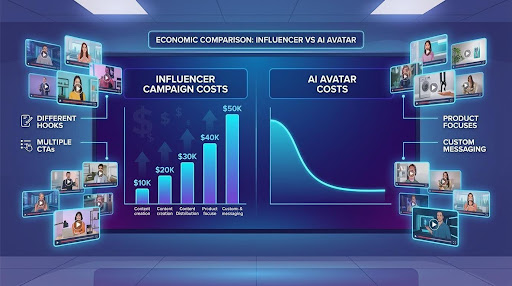
A single influencer campaign can cost $10,000-$50,000+ depending on reach and exclusivity. Multiply that across quarterly campaigns, regional variations, and platform-specific content, and budgets evaporate quickly.
AI Avatars flip this equation. The same technology that generates one video can generate a hundred variations. Different hooks. Different CTAs. Different product focuses. All maintaining the same professional quality and brand consistency.
Small businesses suddenly compete with enterprise budgets. Startups launch sophisticated video campaigns on shoestring resources. Mid-market brands scale content production without scaling headcount.
What This Actually Means for 2026
We’re past the experimental phase. Brands aren’t asking whether talking avatar AI works—they’re optimizing how to deploy it most effectively.
The winners in this space aren’t replacing human creativity; they’re augmenting it. Creative directors focus on strategy and messaging while AI avatars handle execution at scale. The same team that once produced three videos per quarter now produces thirty, each tested and optimized based on performance data.
This isn’t about following a trend. It’s about removing the structural barriers that made video storytelling a luxury good and transforming it into a standard capability. Your competitors are already testing AI influencer strategies. The question is whether you’ll lead this transition or react to it.
The technology exists. The ROI is proven. The only remaining step is implementation.

