


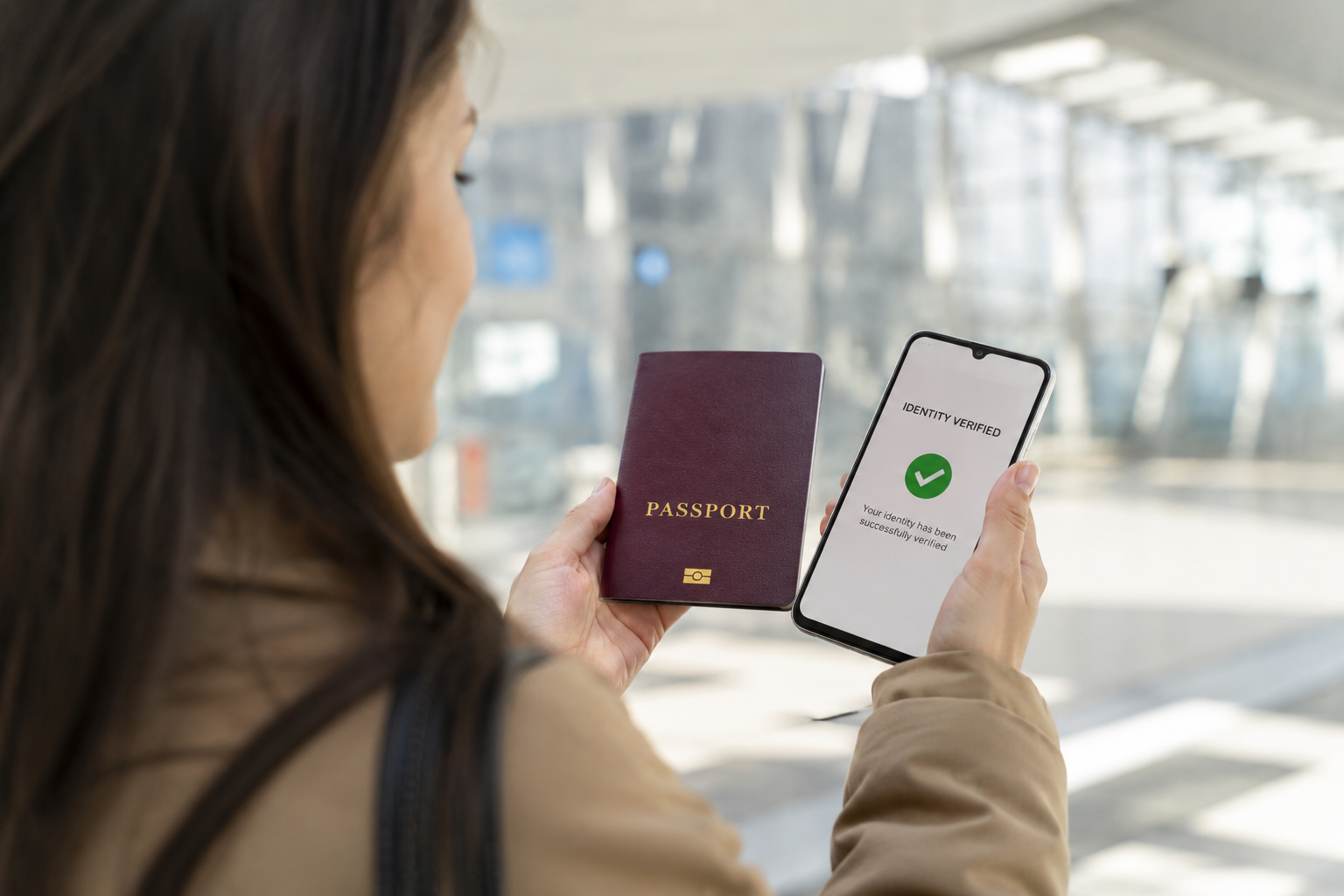

Applying for a passport once meant printed forms, physical photographs, photocopied documents, and a visit to a government office. Today, many parts of the process can be completed online.
Applicants may fill in forms digitally, upload a passport photo, submit supporting information, pay fees, and track progress online. This shift is part of a wider development known as remote identity verification.
The goal is to confirm that an online applicant is a real person and that the identity information being submitted belongs to them.
What Is Remote Identity Verification?
Remote identity verification confirms someone’s identity when they are not physically standing in front of an official.
Depending on the service, the process may involve personal details, images of identity documents, a digital facial photograph, a live camera capture, automated checks, or a video call with a trained agent.
Some systems are fully automated, while others involve a human reviewer. The exact approach depends on the country, document, and level of security required.
The Passport Photo Is Now Digital Data
With a paper application, the passport photo is attached to a form. In an online application, it becomes a digital file that can be uploaded, measured, analysed, stored, and reviewed electronically.
The system may check the file format, dimensions, head position, facial visibility, background, lighting, sharpness, and orientation.
These checks can identify common problems before the application reaches a human reviewer.
Requirements vary between countries and documents. A photo prepared for one passport application may not be suitable for a visa, residence permit, or identity card. Applicants should always follow the rules for the exact document they need.
Why a Live Image May Be Requested
Some remote identity systems ask for a live photograph or short video in addition to an image of an identity document.
The purpose is to show that the applicant is present and resembles the person shown in the submitted evidence. A system may compare the live capture with a reference image, or a trained agent may perform the comparison.
Additional checks can help determine whether the camera is recording a real person instead of a printed photo, prerecorded video, or manipulated image. This is often called liveness detection.
These steps make it harder for someone to apply using another person’s documents or an altered image.
Automated Checks Can Catch Problems Earlier
One advantage of a digital application is that some errors can be detected before submission.
A printed photo may not be reviewed until it reaches an official. If it is unsuitable, the applicant may need to provide another one, causing delays.
An online system may warn that the image is too dark, blurry, incorrectly positioned, unsupported, or the wrong size. It may also detect shadows or an inconsistent background.
Automated feedback does not guarantee approval. Passport authorities can still reject a photo that does not meet official requirements. However, early checks allow applicants to correct simple mistakes sooner.
Convenience Comes With New Responsibilities
Digital passport services can save time, but applicants must handle their information carefully.
They should use the official application website, upload the correct files, follow document-specific requirements, avoid cosmetic editing, and protect personal information.
Third-party services may help with individual tasks, such as preparing a correctly formatted photo. However, they should not be confused with the government authority that receives and approves the application.
Applicants should always check where they are submitting personal details and whether the service is legitimate.
Why Image Editing Has Limits
Online tools can improve the technical presentation of a passport photo, but they should not change the applicant’s appearance.
Acceptable preparation may include correcting the crop, resizing the image, formatting the file, adjusting its position, or preparing a suitable background.
Problematic editing may include reshaping the face, heavily smoothing the skin, enlarging the eyes, adding digital makeup, or removing permanent facial features.
A passport photo is an identity reference, not a social media portrait. It should show the person accurately and naturally.
How Online Passport Photo Tools Help
Services such as PassportPhoto.online help users prepare images for specific passports, visas, and identity documents.
The user selects the relevant country and document type, uploads a suitable photograph, and receives an image prepared for the selected format. This reduces the need to calculate measurements or crop the face manually.
Online tools are useful because there is no universal passport-photo standard. Different authorities may require different dimensions, backgrounds, file sizes, and head proportions.
However, these tools do not issue passports or guarantee approval. The final decision remains with the official authority. They also depend on the original photograph. A blurry, distorted, or heavily filtered image may not produce a suitable result.
Privacy Is Part of the Process
Remote identity verification involves sensitive personal information.
A passport application may include a facial image, legal name, date of birth, address, previous passport details, and supporting documents. Applicants should think carefully about where this information is uploaded and stored.
Before using a third-party service, review its privacy policy, security measures, and file-retention practices. Remove application files from public computers and shared devices after completing the process.
A More Connected Application Process
Remote identity verification is turning passport applications into a more connected digital workflow.
Instead of treating the form, photograph, supporting evidence, payment, and identity checks as separate tasks, online systems can bring them together.
For applicants, this can mean fewer physical errands, faster feedback, and clearer guidance. Authorities may also identify technical problems earlier.
Some applicants will still need in-person help, extra evidence, or manual review. Effective services therefore combine technology with access to human support.
The Passport Application Is Becoming a Digital Identity Experience
The move toward online passport services is about more than replacing paper forms with web pages.
It reflects a wider change in how identity is confirmed remotely. Digital photos, document checks, live image capture, and automated feedback are increasingly connected parts of the same process.
Applicants must still provide accurate information, use a recent and realistic photograph, protect their personal data, and follow the rules set by the issuing authority.
As remote verification develops, passport applications are likely to become more convenient and more closely linked with wider digital identity systems. The challenge will be keeping that convenience secure, understandable, and accessible.