


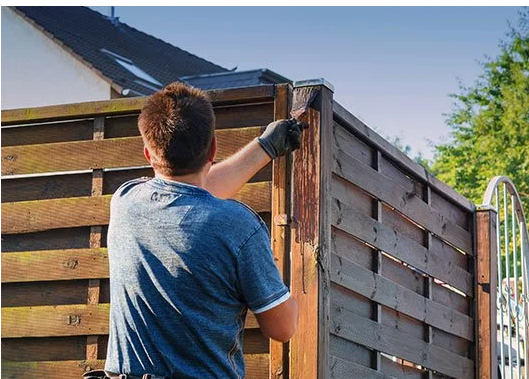

Your fence takes a beating every day. Sun, storms, shifting soil, and the odd stray branch all chip away at it until one morning you spot a board hanging loose or a post that wobbles under your hand. The tricky part is not seeing the damage. It is judging whether a quick fix will do or whether the whole run is past saving. The average fence repair runs about $616, while a full teardown can climb into the thousands, so the call carries real money. Talking to the best fence repair company in your area helps, and this guide gives you the framework to weigh it yourself first.
Key Takeaways
● Isolated problems like loose boards, popped nails, or a sagging gate almost always call for a simple repair.
● Replace the fence once roughly a quarter or more is damaged or the posts have failed underground.
● Repairs that climb past half the cost of a brand new fence rarely make sense.
● Wood fences last around two decades, while vinyl and metal can stretch well beyond that.
● A sound, attractive fence can return close to half its value at resale.
What a Failing Fence Quietly Costs You
A neglected fence drains value from your property in ways that reach well past the eyesore at the edge of the yard. It frames your whole exterior, so a leaning or patchy boundary tends to be the first thing a visitor or buyer clocks.
That impression carries weight. A well built fence can recoup up to half of its installation cost in resale value, which turns upkeep into a financial decision rather than a cosmetic one.
A sound, attractive fence can return as much as 50 percent of its cost when you sell.
There is a safety layer too. A barrier that keeps children and pets in, and strangers out, only works while it stands straight and latches cleanly. Once panels gap or a gate stops closing, that protection quietly slips away.
When the fence sits inside a larger home renovation plan, sorting it early keeps the rest of your project on schedule and on budget.
Signs Your Fence Only Needs a Repair
Most fence problems are smaller than they look, and a repair is the cost effective route whenever the damage stays local. If the posts are solid and only a stretch is affected, a professional can usually set things right within a few hours.
These are the issues that typically point toward a fix rather than a teardown:
● A few cracked, split, or missing boards on an otherwise sound run
● Popped nails, loose screws, or worn hinges and latches
● A gate that drags or no longer lines up with its frame
● Surface rust on a metal or chain link section
● Early, isolated rot or termite activity caught before it spreads
● One post that has loosened but has not rotted through
Pro tip: Act on small problems fast. A leaning post becomes a collapsed section, and a sagging gate strains the posts beside it until a $200 fix turns into a $2,000 one.
Published 2026 cost figures put a typical fence fix between $304 and $946, far below the price of starting over.
Signs It Is Time to Replace the Fence
Replacement becomes the smarter call once damage stops being local and turns structural. The clearest trigger is the posts. They anchor everything, and once they rot below ground or pull loose at the footing, new boards bolted to a failing frame will not hold for long.
A widely used contractor benchmark is the 20 to 25 percent rule. When more than a fifth of the structure is heavily damaged, patching it piece by piece usually costs more over time than a clean swap. The logic is simple: the intact 80 percent is aging right alongside the rest.
Cost gives you a second yardstick. Industry cost breakdowns suggest that once a quote passes roughly half the price of a new fence, replacement is the better investment.
Other signals the structure has reached the end of its service life:
● You have already patched the same stretch more than once
● Several posts lean, wobble, or pull away from the panels
● Wood feels soft and crumbling along the bottom rail
● Warping, splitting, or insect tunnels run the length of the run
Heat and weather speed all of this along. The same sun and moisture cycles that age a roof also wear down a boundary, which is why material choice matters as much here as it does for the exterior surfaces overhead.
Repair vs Replacement: Running the Numbers
The math behind the decision comes down to three figures: cost per linear foot, the share of the fence affected, and how many years you expect to squeeze out of it.
Repairs are billed by the foot or by the hour. Straightforward wood work runs about $15 to $35 per linear foot, while specialty repairs on wrought iron sit higher. A full replacement generally lands between $30 and $80 per linear foot once removal and fresh materials are counted.
|
Situation |
Smarter Move |
|
A few damaged boards or panels |
Repair |
|
One loose post, frame still solid |
Repair |
|
Sagging gate or worn hardware |
Repair |
|
More than 20 to 25 percent damaged |
Replace |
|
Multiple rotted or leaning posts |
Replace |
|
Quote tops 50 percent of new cost |
Replace |
|
Fence past its expected lifespan |
Replace |
Responsiveness matters once you have made the call. In a customer review, Benjamin W. of Austin noted that his crew finished the job while he was out of town and proved far quicker to answer than other contractors he had contacted. Speed like that keeps a small repair from sliding into a much bigger one.
How Long Different Fences Last
Fence lifespan hinges on material, climate, and upkeep, and knowing the range helps you judge whether a repair is even worth it on an older structure.
|
Material |
Typical Lifespan |
Upkeep |
|
Wood (pine, cedar) |
15 to 20 years |
Stain or seal every few years |
|
Chain link |
15 to 20 years |
Low; watch for rust |
|
Vinyl |
20 to 30 years |
Minimal; occasional cleaning |
|
Wrought iron / aluminum |
20+ years |
Periodic rust treatment and paint |
Wood stays the most common and the most forgiving to fix, since a single board or picket swaps out easily. It also asks for the most attention, because moisture and intense heat draw out rot and warping faster than on other materials.
Vinyl and metal cost more upfront but shrug off the elements, much like the material logic behind roofing built for tough climates. If a wood fence is already two decades old and asking for constant care, putting money toward a sturdier material usually beats another round of patching.
When to Call a Professional
Some fence work is a fair weekend project, yet several situations call for a trained eye. Anything touching structural posts, buried concrete, property lines, or permits tends to cost more when a do it yourself attempt goes sideways.
Bring in a contractor the moment you notice any of these:
● Posts set in concrete that need digging out and resetting
● Damage spread across multiple sections or the entire run
● A fence near or past its expected service life
● Specialty materials like wrought iron or custom panels that need matching
● Storm damage you may want documented for an insurance claim
A seasoned crew can also catch trouble hiding below the surface, like rot inside a post or soil movement under a footing, that is easy to miss from the curb. That early read is exactly what separates a planned repair from an emergency one.
For more on how exterior materials hold up over the years, the design guide series on this site makes a useful companion as you weigh your options.
Frequently Asked Questions
What is the 20 percent rule for fences?
Among contractors, it means that once over a fifth of your fence is heavily damaged, replacement usually beats repair. Fixing that much piece by piece often runs higher across a few seasons, since the rest of the fence is aging too.
How much does a typical fence repair cost?
Fence repairs average about $616, with most projects falling in the $304 to $946 range. The final figure depends on the material, the height, the type of damage, and how many feet of the run need work.
Can I replace just one section of fence?
Yes. If the posts and frame are sound, a contractor can swap out individual boards, panels, or a single section without touching the rest. Treating the surrounding wood afterward helps stop rot or pests from spreading.
How long should a wood fence last?
A well maintained wood fence lasts between 15 and 20 years. Sealing or staining on a regular cycle, clearing moisture at the base, and treating early rot all push it toward the upper end of that span.
Does a new fence add value to my home?
A new fence often returns a meaningful share of its price when you sell, sometimes close to 50 percent. Buyers favor durable materials and genuine privacy, and a clean, straight boundary lifts curb appeal the moment someone pulls up.
The Bottom Line
Reading your fence is mostly a question of scale. Isolated damage on a solid frame points to a repair, while failing posts, widespread rot, or a run past its prime point to replacement. Run the 20 percent check, weigh any quote against the cost of a fresh install, and factor in how many years the structure has left. A short, honest assessment from a trusted local pro fills in whatever the curbside view cannot, and it usually saves you money either way.