


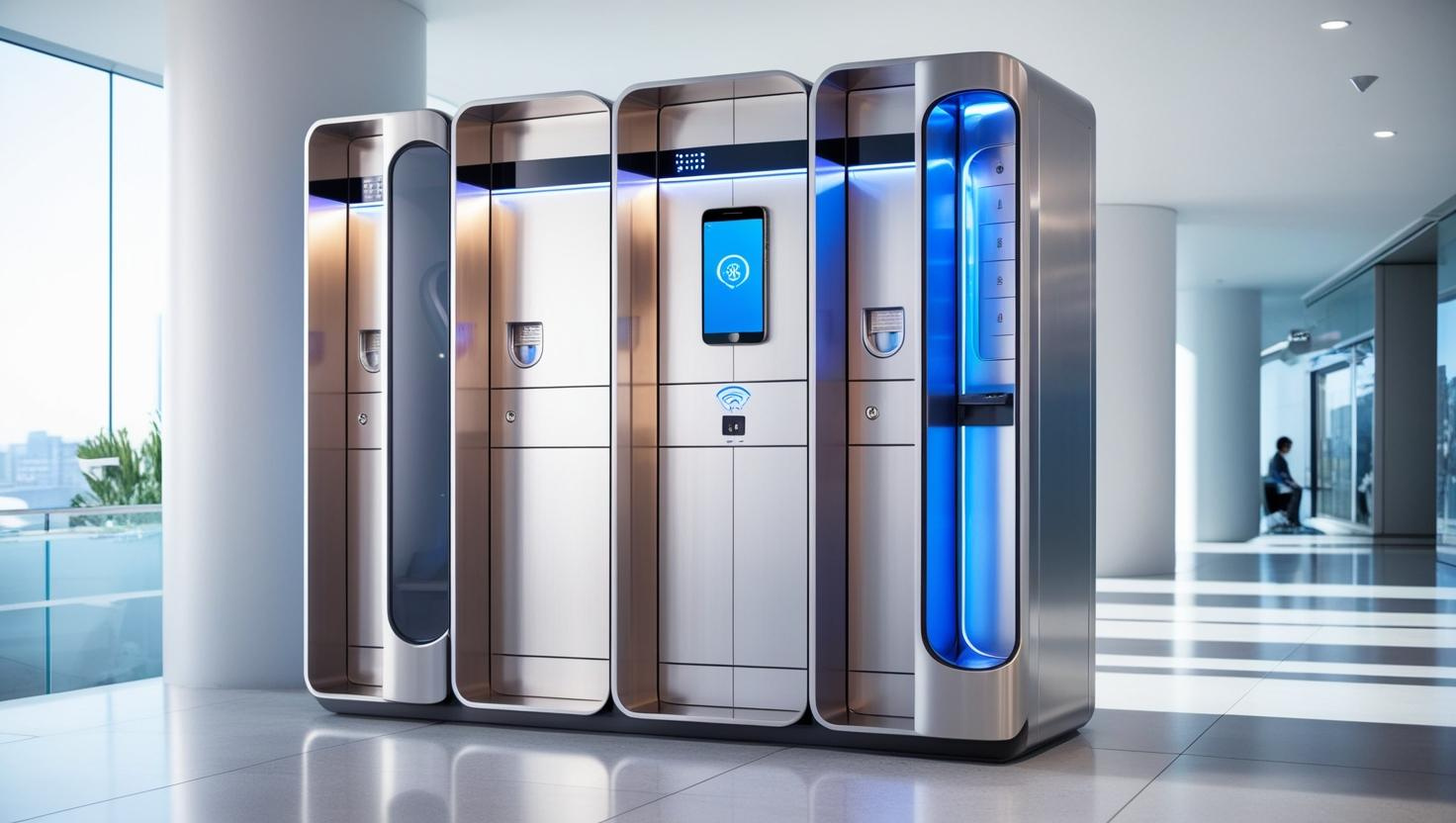
As organizations expand across offices, campuses, warehouses, and service locations, the operational challenge of managing shared devices and business-critical assets has become more complex. Enterprise IT teams now oversee large fleets of laptops, tablets, scanners, mobile computers, peripherals, and specialized equipment that must be distributed, secured, returned, repaired, and redeployed across multiple locations. At the same time, hybrid work, regional operations, and decentralized service models have increased demand for systems that can support asset access without relying on manual handoffs.
This shift has made physical storage only part of the equation. What enterprises increasingly need is a controlled way to manage how devices and equipment move through the organization. The issue is not simply where assets are stored, but how they are issued, tracked, authenticated, monitored, and governed. As NIST notes in its guidance on enterprise IT asset management, organizations need processes and systems that provide visibility into where devices are located, how they are being used, and how they are secured across the lifecycle.
In response, many organizations are moving toward an enterprise smart locker platform model. Rather than deploying lockers as isolated endpoints, they are implementing centrally managed systems that support device management, workplace services, logistics workflows, and automated asset distribution at enterprise scale. This is what makes smart locker infrastructure increasingly relevant as part of modern operational technology.
Why Enterprise Organizations Need Locker Platforms — Not Just Hardware
A key distinction in the market is the difference between standalone locker hardware and a smart locker platform. Hardware can provide secure storage and controlled access at a single site. A smart locker platform provides the software layer needed to manage multiple lockers, users, assets, and workflows across an enterprise environment.
That difference becomes important quickly in organizations with distributed operations. A local locker bank may be manageable with on-site administration, but enterprise deployments require centralized dashboards, remote configuration, system-wide visibility, and consistent policy control. Without that software layer, each location becomes its own process island. That can create fragmented reporting, inconsistent access rules, and higher administrative overhead.
This is why large organizations increasingly evaluate enterprise smart locker systems as software-defined infrastructure rather than facilities hardware. The lockers themselves remain physical endpoints, but the value comes from the management layer behind them. A platform allows administrators to monitor availability, push configuration changes remotely, standardize workflows, and connect locker activity to broader enterprise systems.
For IT and operations leaders, that means smart lockers can become part of a structured operating model rather than an isolated convenience tool. That operating model is especially important in environments where devices are shared, equipment is frequently reissued, and service teams need clear accountability across sites.
Key Capabilities of Enterprise Smart Locker Platforms
A modern enterprise smart locker platform is expected to do far more than open and close doors. At enterprise level, the required capabilities are closely tied to visibility, control, and interoperability.
● One core capability is asset and device tracking. Organizations need to know what is in each locker, what has been issued, what has been returned, what is overdue, and where exceptions are occurring. This helps reduce time spent reconciling inventory manually and allows teams to identify bottlenecks or stock imbalances across locations.
● Another critical capability is automated access management. In many deployments, locker workflows are designed to reduce the need for staff-mediated distribution. Employees, contractors, students, or field personnel can authenticate, retrieve an assigned item, and complete a return or exchange through a controlled workflow. That makes automated locker platforms valuable in environments with high transaction volume or limited support staff.
● Integration is equally important. Smart locker management software is most effective when it works alongside enterprise identity systems, ticketing environments, endpoint management tools, and internal reporting systems. Microsoft notes that enterprise reporting systems such as Intune are designed to support visibility into device status, compliance, activity, and trends across the organization, reinforcing the broader expectation that operational systems should feed centralized oversight.
● Authentication options also matter. Enterprises often require support for badge access, SSO, PINs, or role-based permissions depending on the user group and the sensitivity of the asset. Finally, centralized reporting and audit trails are essential. A platform should provide an accessible record of who accessed what, when they did so, and whether the transaction complied with policy.
Together, these features make smart locker infrastructure operationally useful rather than merely secure.
How ForwardPass Enables Scalable Smart Locker Operations
In this context, platforms such as the ForwardPass solution reflect how enterprises are approaching locker deployments as centrally managed infrastructure. The focus is not only on physical storage, but on how lockers can be controlled as part of a broader system spanning multiple sites and workflows.
A cloud-based approach is particularly relevant for large deployments. It allows administrators to oversee locker activity across locations, apply common policies, adjust configurations remotely, and maintain visibility without requiring local intervention at every site. For organizations managing complex device programs, that reduces fragmentation and makes it easier to scale a consistent operating model.
This matters because device management lockers are increasingly being used in scenarios beyond basic storage. Enterprises may use them to stage replacement laptops, issue temporary loaners, support break-fix workflows, distribute field equipment, or automate returns. In each case, the locker functions as a controlled endpoint within a software-managed process.
From an enterprise operations perspective, the value lies in orchestration. Locker deployments become more useful when they are managed as networks rather than as isolated units. A platform model supports that by giving teams centralized control over distribution logic, user access, asset states, and reporting across the environment.
Supporting Complex Enterprise Workflows
The practical value of an enterprise smart locker platform becomes clearer when viewed through the workflows it supports.
● In enterprise IT, lockers can streamline new-hire provisioning, loaner distribution, repair exchanges, and after-hours device pickup. Instead of requiring a technician to hand off equipment directly, a device can be staged, assigned to a user, and retrieved through authenticated self-service. This reduces wait times and helps service desks handle growing volume without expanding manual effort at the same rate.
● In workplace operations, locker networks can support employee equipment management across hybrid work environments. Teams can distribute monitors, accessories, mobile devices, badges, or onboarding kits through controlled workflows that are consistent across offices. This is especially useful where staffing levels vary by site or where employees need flexible pickup options.
● In logistics and field operations, lockers can support secure transfers of scanners, handhelds, tablets, keys, or job-specific equipment between shifts and teams. In these settings, enterprise smart locker systems help maintain continuity while reducing informal handoffs that can lead to missing assets or weak accountability.
Across all of these scenarios, the common benefit is workflow automation. Manual distribution processes tend to rely on staff availability, ad hoc communication, and incomplete recordkeeping. Automated workflows reduce those dependencies and create more structured, traceable asset movement.
Security and Compliance Considerations
Security requirements become more demanding as locker deployments expand and as the assets stored within them become more valuable or sensitive. That makes governance a central requirement for any smart locker management software intended for enterprise use.
● Authentication is the first layer. Locker access should align with the organization’s identity and access framework, rather than operate as a disconnected local process. Microsoft’s Zero Trust guidance emphasizes explicit verification, least-privilege access, and policy enforcement as foundational security principles in enterprise environments. Those same principles apply when controlling access to physical endpoints that distribute business-critical devices and equipment.
● Auditability is also essential. Enterprises need reliable records of issuance, retrieval, returns, exceptions, and administrative changes. NIST guidance on log management highlights that large organizations need structured, centralized approaches to event data because scale and distribution make ad hoc monitoring insufficient. In the context of lockers, that means access events and operational activity should be visible, reviewable, and suitable for governance purposes.
● Physical security still matters as well. Controlled compartments, role-based permissions, secure storage conditions, and workflow restrictions can all play a role depending on the use case. Where regulated devices or sensitive assets are involved, enterprises may also need retention policies, chain-of-custody documentation, or support for internal compliance controls.
For that reason, security in automated locker platforms should be understood as both a physical and digital design requirement.
Scaling Smart Locker Networks Across Locations
Pilot deployments often prove the concept. The more difficult step is scaling the model across many sites without increasing complexity faster than value.
This is where smart locker infrastructure must function as enterprise software. Organizations need to add sites, users, assets, and workflows without rebuilding their operating processes each time. Centralized policy management becomes important because it allows standards to be maintained across offices, campuses, distribution centers, and service locations. Remote monitoring also becomes more valuable because it reduces dependency on on-site administration.
Integration plays a major role here as well. As locker networks grow, they need to fit into existing enterprise environments rather than create parallel systems. That includes identity platforms, reporting tools, IT service workflows, and operational data systems. Scalable deployments tend to succeed when lockers can be incorporated into existing governance and support structures.
For enterprise leaders, the core question is straightforward: can the system expand without creating fragmented administration? A locker deployment that requires site-by-site management may work at small scale but become difficult to sustain across a large organization. A platform approach is what allows growth to remain manageable.
Building Smart Infrastructure for Enterprise Operations
Enterprise adoption of smart lockers is best understood as an infrastructure shift. Organizations are not simply adding storage hardware; they are implementing platforms that help automate asset distribution, support device management at scale, reduce manual workflows, and maintain centralized control across locations.
That is why the market is moving toward the enterprise smart locker platform model. As device fleets grow and workflows become more distributed, organizations need systems that can combine secure access with centralized oversight, software integration, and repeatable policy enforcement. In that sense, enterprise smart locker systems are becoming part of the broader technology stack used to support workplace operations, IT services, and logistics execution.
For enterprises managing complex environments, the long-term value lies in consistency and scale. Locker programs work best when they are not treated as isolated hardware deployments, but as software-managed operational infrastructure designed to support the full lifecycle of devices and assets.


